Carob Tree Explained: Where Carob Comes From
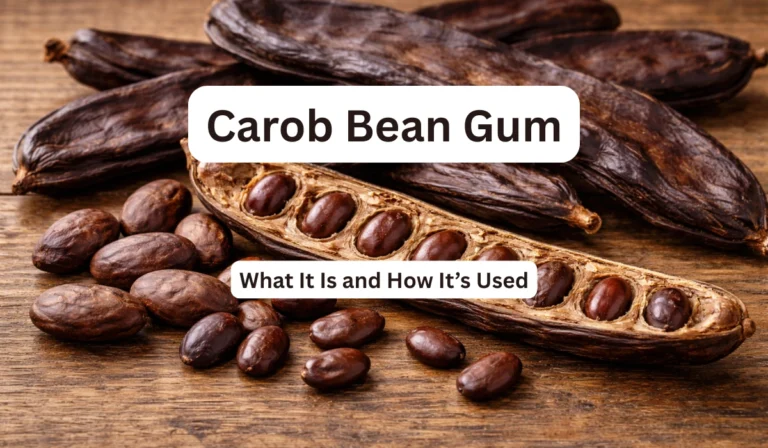
The carob tree (Ceratonia siliqua) is an evergreen tree best known for producing long pods that ripen from green to dark brown. The sweet pod pulp is used to make carob powder, syrup, and molasses, while the hard seeds are processed for carob bean gum.
Carob trees are strongly associated with the Mediterranean region and grow best in warm, sunny climates with relatively dry summers.
What Is a Carob Tree?
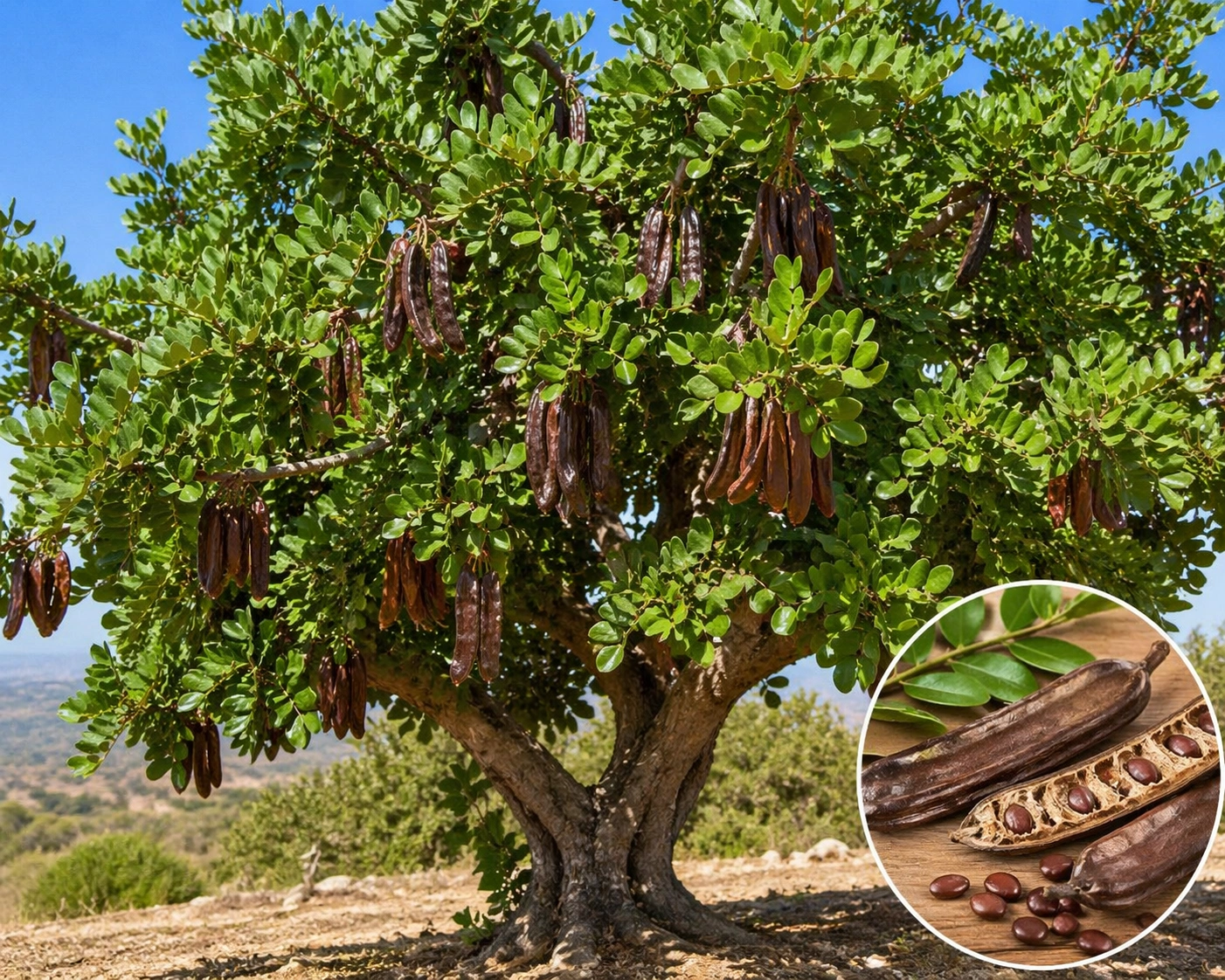
The carob tree is a broadleaf evergreen in the legume family. Its botanical name is Ceratonia siliqua. Mature trees develop dense foliage and produce the pods that supply nearly every familiar carob ingredient.
If you want the ingredient overview rather than the plant itself, start with What Is Carob?.
Where Do Carob Trees Grow?
Carob trees are closely associated with the Mediterranean basin, including parts of Spain, Portugal, Italy, Greece, Cyprus, Turkey, North Africa, and the eastern Mediterranean.
They are adapted to warm, sunny conditions and relatively dry summers. This climate helps explain why carob has such a long agricultural history in Mediterranean regions.
What Does a Carob Tree Look Like?
A mature carob tree has a sturdy trunk, spreading branches, and dense evergreen foliage. Its leaves are thick, glossy, and divided into rounded leaflets.
The most recognizable feature is the fruit: long pods that hang from the branches and darken as they ripen.
Carob Tree Leaves, Flowers, and Pods
Leaves
Carob leaves are evergreen, leathery, and glossy. Their firm texture helps the tree cope with dry growing conditions.
Flowers
Carob trees produce small flowers in clusters. They are much less showy than the fruit, but they are the stage that leads to pod development.
Pods
The pods start green and become brown as they mature. Inside are sweet pulp and several hard seeds. The Carob Pods guide explains the fruit in more practical detail.
What Fruit Does the Carob Tree Produce?
The fruit of the carob tree is the carob pod. The pod is dry and leathery when ripe rather than soft and juicy. Its pulp has a naturally sweet, earthy flavor, while the seeds are very hard.
For a closer look at the two parts of the fruit, see Carob Fruit and Seeds.
How Carob Goes From Tree to Kitchen
- The tree develops pods that ripen from green to brown.
- Ripe pods are harvested and dried.
- The hard seeds are separated from the pod material.
- The pulp can be roasted and ground into carob powder.
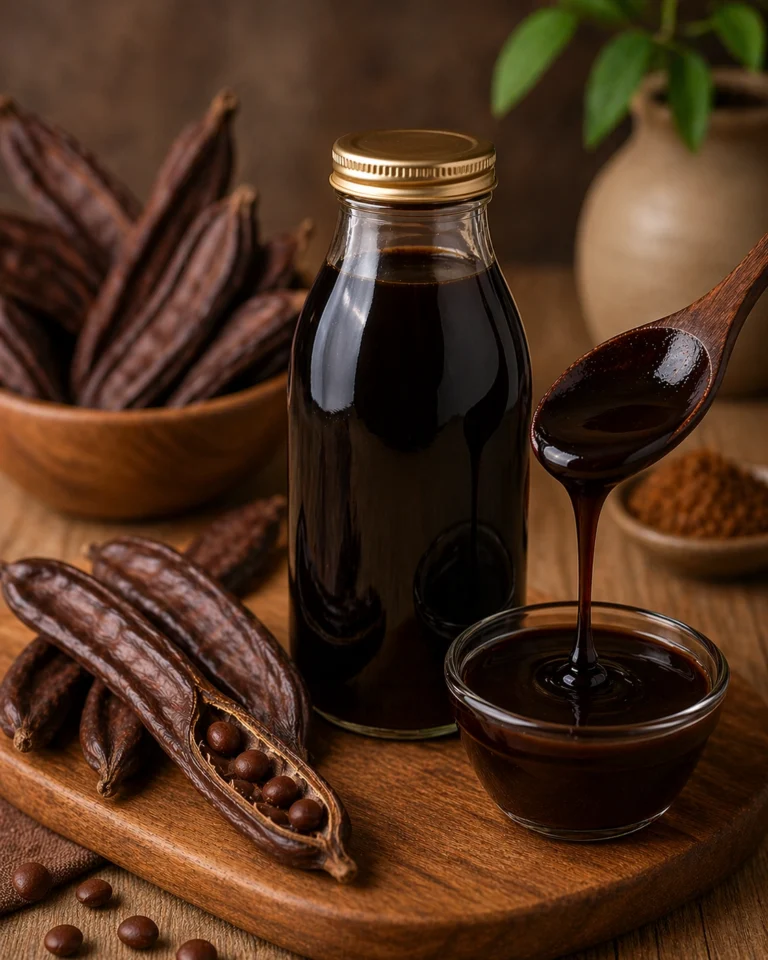
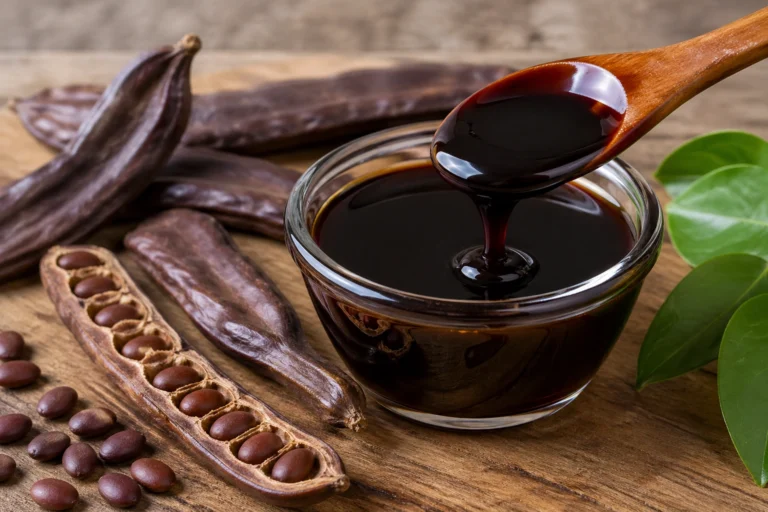
- The pulp can also be extracted and reduced into carob syrup or carob molasses.
- The seeds are processed separately to make carob bean gum.
This is why the tree connects directly to several very different food ingredients: the pod pulp supplies flavor, while the seeds supply a thickening ingredient.
Carob Tree vs Cacao Tree
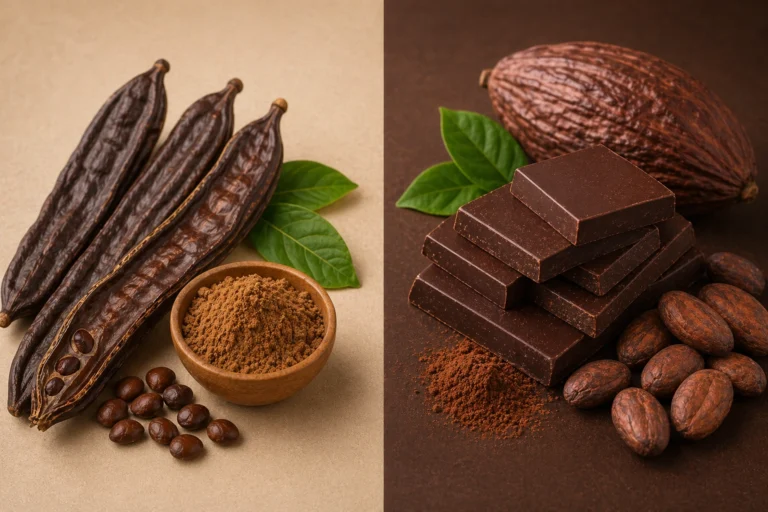
Carob and cacao are unrelated plants that grow in different climates and produce different raw materials.
| Feature | Carob tree | Cacao tree |
|---|---|---|
| Botanical name | Ceratonia siliqua | Theobroma cacao |
| Typical climate | Mediterranean-type, warm and relatively dry | Tropical, warm and humid |
| Main culinary material | Sweet pod pulp | Seeds known as cacao beans |
| Common products | Carob powder, syrup, molasses, gum | Cocoa powder, cocoa butter, chocolate |
| Flavor direction | Sweet, toasted, earthy | Deep, cocoa-forward, bitter when unsweetened |
For the ingredient-level comparison in baking, see Carob vs Cocoa.
Why Carob Trees Are Well Suited to Mediterranean Climates
Carob trees are known for tolerating heat and dry conditions once established. Their evergreen foliage, sturdy growth, and ability to perform in Mediterranean-type environments help explain why they have remained an important crop in those regions.
That agricultural background is useful for understanding carob as more than a specialty baking ingredient: it is the product of a tree adapted to a specific landscape and food tradition.
Can You Grow a Carob Tree at Home?
Carob trees can be grown in suitable warm climates with plenty of sun and well-drained soil. They are not a practical outdoor tree for every region, especially where winters are too cold or conditions stay wet for long periods.
If your interest is mainly culinary, buying prepared carob powder, pods, chips, or syrup is much simpler than growing a tree for ingredients.
Carob Tree FAQ
What is the scientific name of the carob tree?
The scientific name is Ceratonia siliqua.
What grows on a carob tree?
Carob trees produce long pods containing sweet pulp and hard seeds.
Where are carob trees found?
They are strongly associated with Mediterranean countries and other regions with warm, sunny, relatively dry climates.
Are carob trees evergreen?
Yes. Carob is an evergreen tree with thick, glossy foliage.
Bottom line: the carob tree is the source of the entire carob ingredient family. Its ripe pods provide sweet pulp for powder and syrups, while its seeds are used for carob bean gum.
To turn that ingredient knowledge into practical cooking, browse the Carob Recipes hub.
2 Comments