Carob Bean Gum: What It Is, How It’s Made & Uses
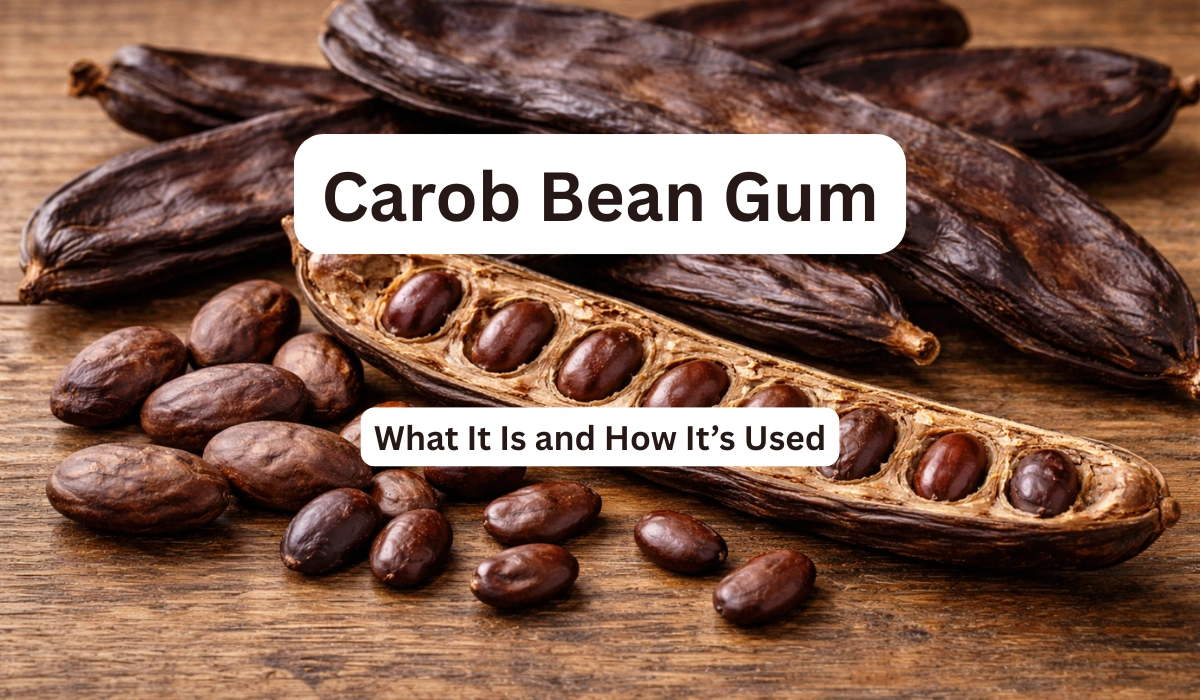
Carob bean gum is a food thickener and stabilizer made from the seeds of the carob tree. It is the same ingredient as locust bean gum and is used mainly to change texture rather than to add carob flavor.
Unlike carob powder, which comes from the pod pulp, carob bean gum comes from material inside the seed. Food manufacturers use it in products such as frozen desserts, dairy products, sauces, fillings, and other foods where smoothness, thickness, or stability matters.
What Is Carob Bean Gum?
Carob bean gum is a plant-derived hydrocolloid: an ingredient that interacts with water and can help thicken or stabilize a food mixture. It is produced mainly from the endosperm of carob seeds and is rich in a carbohydrate called galactomannan.
Its job in food is very different from the job of carob powder, chips, syrup, or molasses. Those ingredients are used primarily for carob flavor or sweetness. Carob bean gum is used primarily for texture.
Is Carob Bean Gum the Same as Locust Bean Gum?
Yes. Carob bean gum and locust bean gum are two names for the same ingredient. On European ingredient labels you may also see the additive code E410.
The word “locust” in this name refers to an older name associated with the carob tree, not to the insect.
What Is Carob Bean Gum Made Of?
Carob bean gum comes from the seeds inside mature carob pods. A carob seed has several layers, and the gum is produced mainly from the endosperm, the portion rich in galactomannan.
This is why carob bean gum is related to carob but does not taste like the familiar roasted powder used in baking. The flavorful carob pod pulp and the hard seeds have different culinary uses.
For a closer look at the pulp, seeds, and pod structure, see Carob Fruit and Seeds.
How Is Carob Bean Gum Made?
Commercial processing varies, but the basic production steps are straightforward:
- Separate the seeds. The seeds are removed from mature carob pods.
- Remove the seed coat and germ. Processing isolates the endosperm, which is the part used for the gum.
- Mill the endosperm. The separated material is ground into a fine powder.
- Standardize and finish the powder. Further processing may be used to achieve a consistent food-grade ingredient.
The finished gum is light in color and relatively neutral in flavor, which allows it to change texture without adding the roasted taste associated with carob powder.
What Does Carob Bean Gum Do in Food?
Carob bean gum is used mainly as a thickener, stabilizer, and texture modifier. Depending on the recipe and the other ingredients present, it can help a food mixture hold water, develop body, or remain more uniform during storage.
It is often used together with other gums because combinations of hydrocolloids can produce different textures from either ingredient alone.
Common Uses of Carob Bean Gum
Ice Cream and Frozen Desserts
Locust bean gum is commonly used in frozen dessert formulations to add body and help control texture as the product freezes and is stored. In commercial recipes it is often combined with other stabilizers rather than used by itself.
Dairy and Plant-Based Products
It can appear in products such as yogurt, cream-style products, desserts, and some plant-based beverages or alternatives where manufacturers want a smoother or more stable texture.
Sauces, Dressings, and Fillings
Carob bean gum can contribute viscosity and help keep a mixture more uniform. The exact result depends on the full formulation, including water, temperature, acidity, and any other gums or starches present.
Baked and Prepared Foods
It may also appear in prepared baked goods, fillings, confectionery, and other manufactured foods where texture control is useful. In these products, the amount used is usually small relative to the main ingredients.
How Carob Bean Gum Behaves in Recipes
Carob bean gum is more specialized than everyday ingredients such as flour or cornstarch. Its performance depends on concentration, temperature, mixing method, and the other ingredients in the recipe.
It does not always fully hydrate in cold water, so food formulations commonly use heat when developing its thickening effect. It can also behave differently when combined with other hydrocolloids.
For home cooking, it is better to follow a tested recipe or the manufacturer’s directions than to use a universal teaspoon measurement. Small formulation changes can produce a noticeably different texture.
Carob Bean Gum vs Xanthan Gum vs Guar Gum
All three ingredients can change food texture, but they come from different sources and do not behave identically.
| Ingredient | Source | Typical behavior |
|---|---|---|
| Carob bean gum | Carob seed endosperm | Thickens and stabilizes; often benefits from heat for fuller hydration and is frequently combined with other gums. |
| Xanthan gum | Produced by microbial fermentation | Builds viscosity efficiently and can work in cold mixtures; commonly used in sauces, dressings, and formulated baked foods. |
| Guar gum | Guar seed endosperm | Hydrates readily in cold water and is widely used as a thickener in liquid and prepared food systems. |
The best choice depends on the recipe. These gums are not always interchangeable one-for-one because their hydration and texture effects differ.
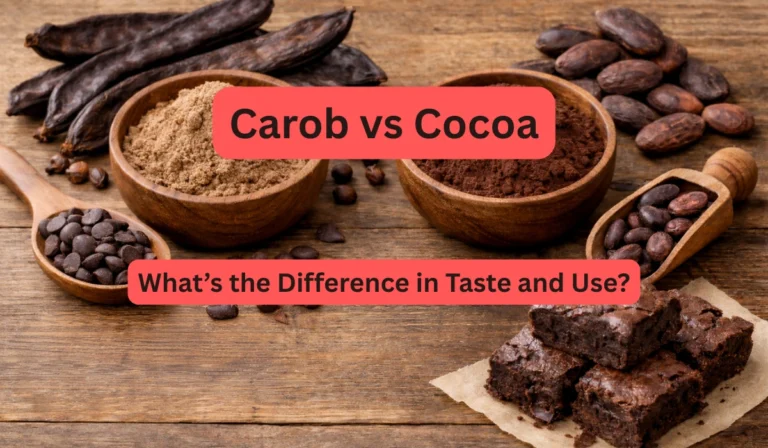
Carob Bean Gum vs Carob Powder
Despite sharing the word “carob,” these ingredients have very different jobs.
| Feature | Carob Bean Gum | Carob Powder |
|---|---|---|
| Made from | Seed endosperm | Pod pulp |
| Main purpose | Texture and stability | Flavor and color |
| Flavor | Relatively neutral | Sweet, roasted carob flavor |
| Typical use | Small amounts in formulated foods | Baking, drinks, frostings, and desserts |
If you are looking for the carob ingredient used for flavor in home baking, start with the Carob Powder guide instead.
Can You Use Carob Bean Gum at Home?
Yes, but it is a more technical ingredient than carob powder or carob chips. It makes the most sense when you are following a recipe specifically formulated with locust bean gum or when a product manufacturer provides usage instructions.
If a recipe does not call for it, adding it casually can make a mixture too thick or change the texture in an unexpected way. For everyday carob baking, the main Carob Recipes collection focuses on more familiar carob ingredients.
Carob Bean Gum FAQ
What is carob bean gum used for?
It is used mainly to thicken, stabilize, or modify texture in foods such as frozen desserts, dairy products, sauces, fillings, and other prepared foods.
What is carob bean gum made of?
It is made mainly from the endosperm of seeds found inside carob pods.
Is locust bean gum the same as carob bean gum?
Yes. The names locust bean gum and carob bean gum refer to the same ingredient.
Does carob bean gum taste like carob?
Not in the way carob powder does. Carob bean gum is relatively neutral in flavor and is used mainly for texture.
Is carob bean gum the same as carob powder?
No. Carob bean gum is made from seed material and is used as a texture ingredient. Carob powder is made from pod pulp and is used mainly for its flavor and color.
Explore More About Carob
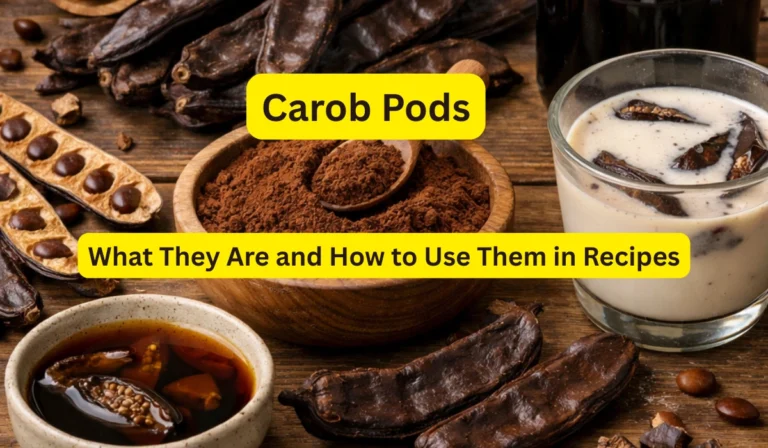
To understand where carob bean gum fits into the rest of the plant, continue with What Is Carob?, Carob Pods, Carob Fruit and Seeds, and Carob Powder.
3 Comments