Carob Pods: What They Are and How to Use Them in Recipes
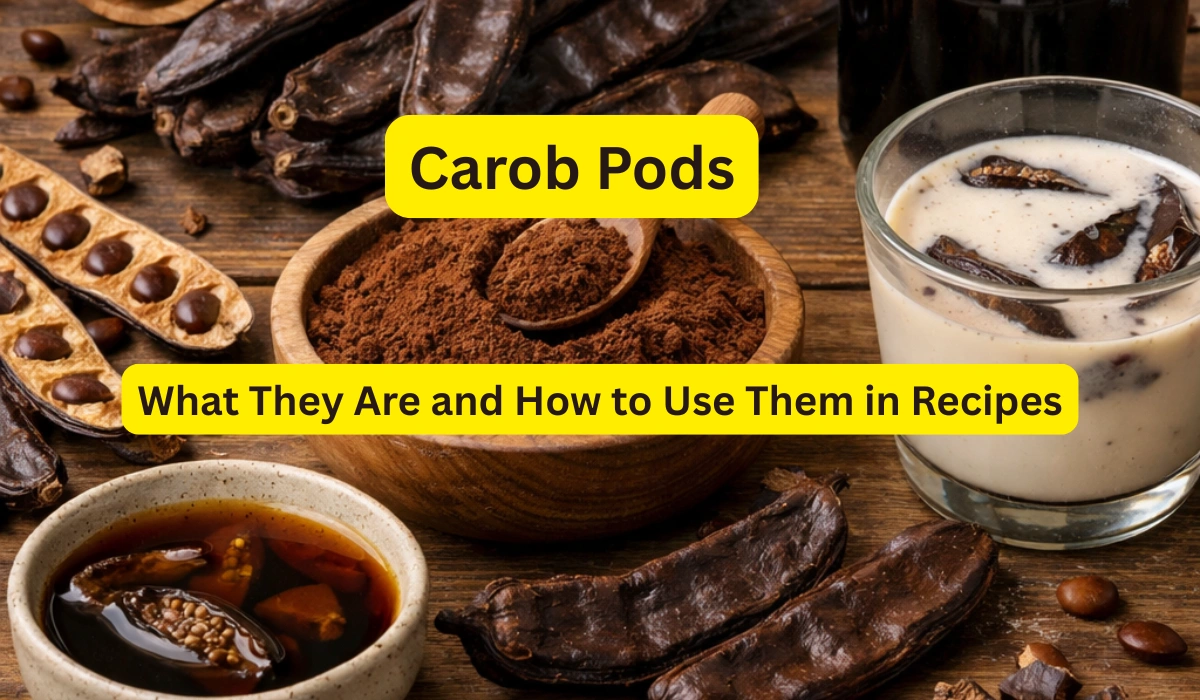
Carob pods are the long, brown seed pods of the carob tree (Ceratonia siliqua). The sweet pulp inside the pod is used to make products such as carob powder, syrup, and molasses, while the hard seeds are processed separately to make carob bean gum. For the broader ingredient overview, see how carob fits together from pod to pantry.
If you have whole or dried carob pods, you can also use the pod pulp at home for infusions, coarse ground carob, or other simple culinary experiments. The main thing to know is that the seeds are extremely hard and should be separated before grinding the pulp.
What Are Carob Pods?
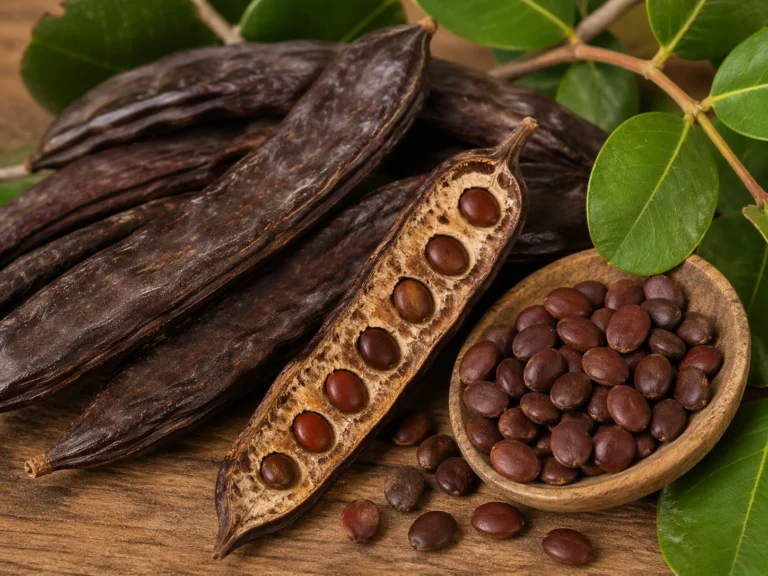
Carob pods are the fruit of the carob tree. They start green and become dark brown as they ripen and dry. A mature pod is firm and leathery, with sweet pulp surrounding several very hard seeds.
Almost every familiar carob ingredient begins with some part of the pod. If you want a closer look at the fruit structure itself, see Carob Fruit & Seeds.
What Is Inside a Carob Pod?
Sweet pod pulp
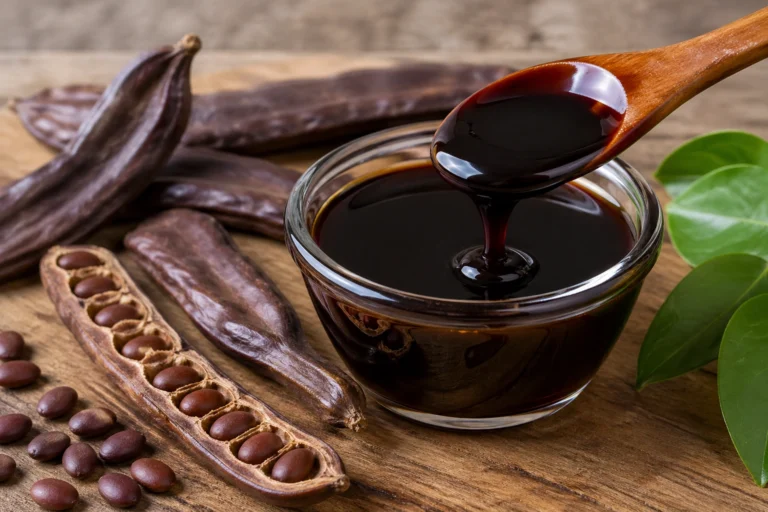
The bulk of the pod is a fibrous, naturally sweet pulp. Once dried and processed, that pulp can become carob powder, carob syrup, or carob molasses.
Hard seeds
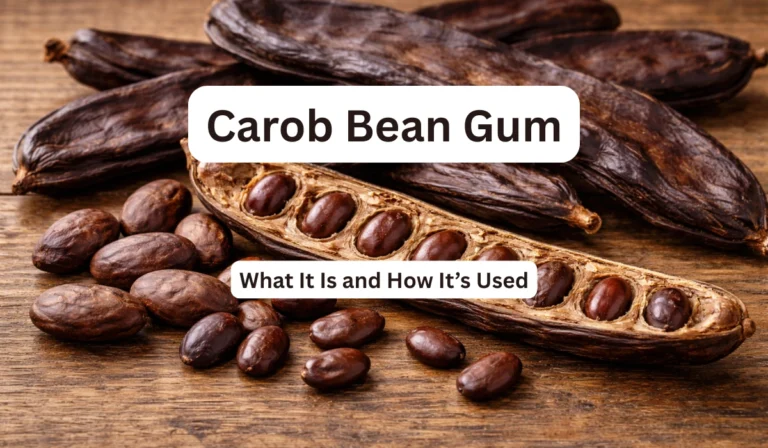
The seeds are smooth and very hard. They are not the part normally ground into carob powder. Industrial processors separate them and use the seed endosperm to make carob bean gum, also called locust bean gum.
What Do Carob Pods Taste Like?
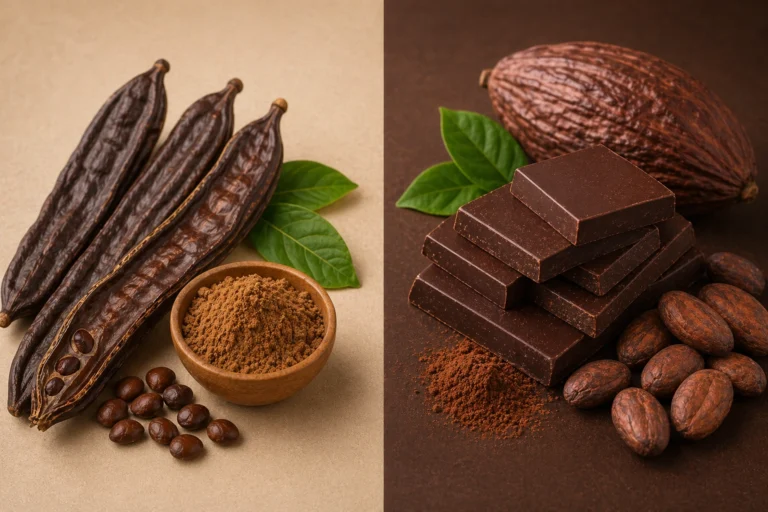
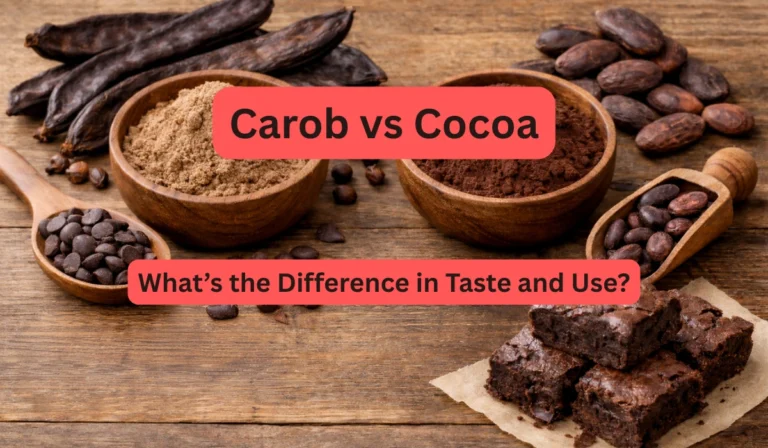
Ripe dried carob pods taste sweet, earthy, and mildly toasted, with notes that can suggest dried fruit, caramel, or light molasses. The flavor is different from cocoa even though carob is often used in some of the same types of recipes.
For a fuller flavor explanation, see What Does Carob Taste Like?.
Are Carob Pods Edible?
Yes. The pod pulp is edible, but whole dried pods are tough and fibrous. If you chew a piece, avoid biting the seeds because they are extremely hard. For most kitchen uses, it is easier to break the pod into pieces, remove the seeds, and use the pulp rather than trying to eat the whole pod like a soft fruit.
How to Use Whole or Dried Carob Pods
Whole dried pods are less convenient than ready-made powder, but they can still be useful if you want to work with carob in a more traditional form.
1. Infuse them in hot water or milk
Break a clean dried pod into pieces and simmer it in water or milk, then strain before serving. The liquid picks up a mild toasted, sweet carob flavor. This is one of the simplest ways to use whole pods without grinding them.
2. Make coarse ground carob
Remove the seeds first, then dry or lightly roast the pod pulp if needed and grind it in a suitable grinder. Homemade ground carob is usually coarser than commercial carob powder, so it works best in rustic bakes, oatmeal, drinks, or recipes where a perfectly smooth texture is not essential.
3. Use them as the starting point for syrup-style preparations
Carob pods can be simmered in water to extract their flavor and sugars before the liquid is reduced. If that is what you want to make, the carob syrup guide explains the finished ingredient in more detail.
How Carob Pods Become Common Carob Products
| Part of the pod | What it becomes | Typical use |
|---|---|---|
| Pod pulp | Carob powder | Baking, drinks, desserts |
| Pod pulp | Carob syrup or molasses | Drizzling, sweetening, sauces |
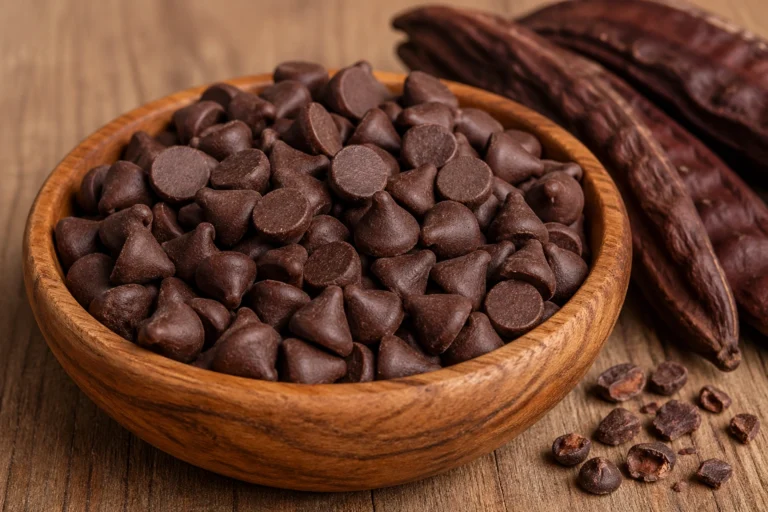
| Carob-derived ingredients | Carob chips and confectionery | Cookies and baking |
| Seeds | Carob bean gum / locust bean gum | Thickening and stabilizing foods |
If you are mainly interested in baking, buying prepared carob powder or chips is usually easier than processing whole pods yourself. The whole pod is most useful when you specifically want to explore where carob ingredients come from or experiment with infusions and rustic preparations.
Fresh vs Dried Carob Pods
Fresh developing pods are green and not the form normally used for carob powder. As the fruit ripens, it darkens and the pulp becomes sweeter and drier. Whole pods sold for culinary use are usually fully ripe and dried because they store better and have the familiar carob flavor.
How to Store Dried Carob Pods
Keep dried pods in a cool, dry place in a sealed container. The main goal is to protect them from moisture and pantry pests. If a pod feels damp, shows mold, or smells off, discard it rather than using it.
Carob Pod FAQ
What can you do with carob pods?
You can use dried pod pieces to flavor hot water or milk, remove the seeds and grind the pulp, or use the pods as the starting material for carob syrup-style preparations.
Can you eat dried carob pods?
The pulp is edible, but dried pods are chewy and fibrous. Do not bite down on the very hard seeds.
Are carob pods the same as carob beans?
People sometimes use the words loosely, but the whole fruit is a pod and the hard structures inside are seeds. The term “carob bean” is common in names such as carob bean gum, even though the gum comes from the seed.
Do you need whole pods for carob recipes?
No. Most home recipes are much easier with prepared carob powder, chips, syrup, or molasses. Browse the Carob Recipes hub if you want practical baking ideas using those ingredients.
Bottom line: carob pods are the fruit behind nearly every major carob ingredient. Their sweet pulp becomes powder and syrups, while their hard seeds are used for carob bean gum. Whole dried pods are edible and useful for simple infusions or DIY experiments, but prepared carob products are more convenient for everyday baking.
5 Comments