Carob Syrup: What It Is and How It’s Made
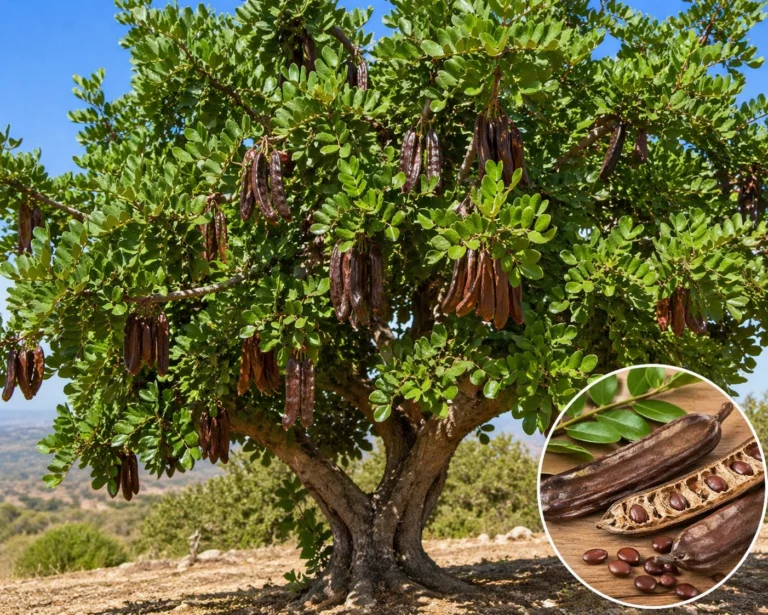
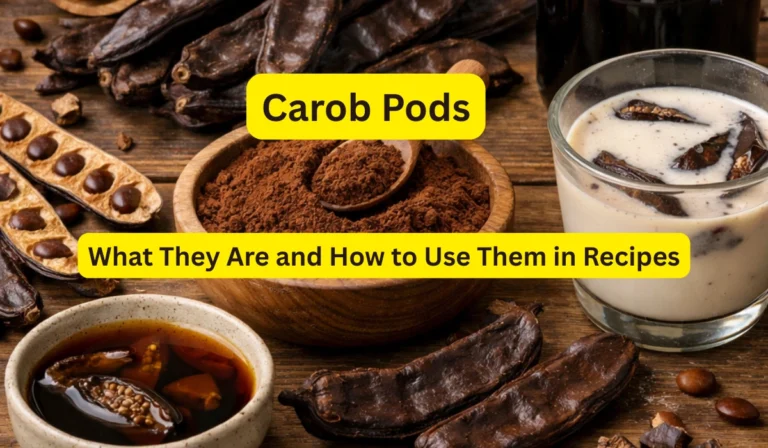
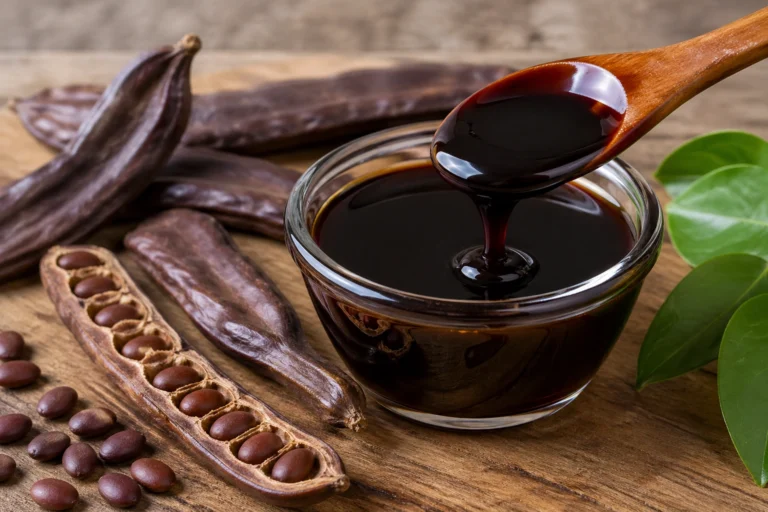
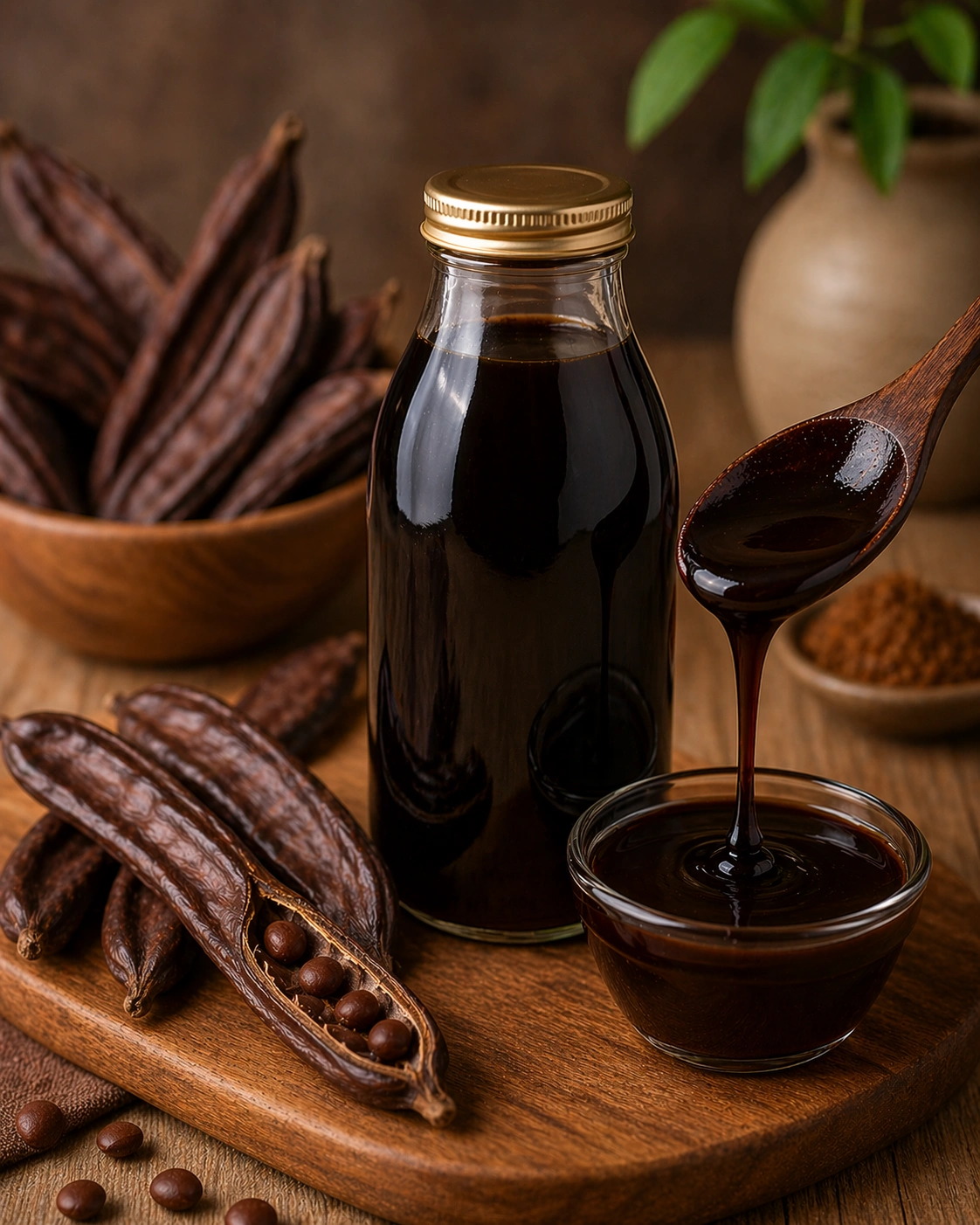
Carob syrup is a dark, pourable sweetener made from ripe carob pods. The pod pulp is soaked or simmered in water, the solids are strained out, and the flavored liquid is reduced until it becomes concentrated and syrupy. If you are new to the ingredient itself, start with the main guide to carob.
It tastes sweet, roasted, slightly fruity, and mildly caramel-like. Carob syrup does not taste like chocolate syrup, even though both can be dark and glossy.
What Is Carob Syrup?
Carob syrup is made from the naturally sweet pulp of carob pods. It is one of several ingredients that can come from the pod, alongside carob powder and carob molasses.
The finished syrup can range from fairly light and pourable to thick and dark, depending on how far it is reduced and how a producer labels the product.
What Does Carob Syrup Taste Like?
Carob syrup has a concentrated version of carob’s natural flavor: sweet, toasted, earthy, and gently fruity. Common flavor comparisons include light molasses, date syrup, dark caramel, and toasted brown sugar.
- sweet and mellow
- roasted and caramel-like
- slightly fruity
- less bitter than cocoa-based sauces
- deeper than plain sugar syrup
For the broader flavor profile of the ingredient itself, see What Does Carob Taste Like?.
Carob Syrup vs Carob Molasses
The two products are very closely related, and some brands or regions use the names interchangeably. When there is a practical difference, carob syrup is usually the thinner, easier-to-pour version, while carob molasses is often thicker and more concentrated.
| Feature | Carob syrup | Carob molasses |
|---|---|---|
| Texture | Usually more pourable | Often thicker |
| Flavor | Sweet, roasted, syrup-like | Darker and more concentrated |
| Common uses | Drinks, pancakes, yogurt, baking | Tahini, toast, baking, sauces |
| Naming | General commercial term | Often traditional or regional term |
See Carob Molasses: What It Is and How People Use It for the thicker version in more detail.
How Is Carob Syrup Made?
- Ripe carob pods are cleaned and broken into pieces.
- The pod pieces are soaked or simmered in water to extract their flavor and natural sugars.
- The solids are strained from the liquid.
- The extracted liquid is simmered gently until it reduces to a syrupy consistency.
- The syrup is cooled and bottled.
This process uses the pod pulp rather than the hard seeds. The seeds are processed separately for carob bean gum.
How to Use Carob Syrup
Carob syrup can be used anywhere a flavorful dark syrup fits the recipe.
- Pancakes and waffles: drizzle it directly over breakfast foods.
- Oatmeal: stir in a small spoonful for deeper sweetness.
- Yogurt: swirl it in with fruit or nuts.
- Warm drinks: mix it into milk or plant milk.
- Smoothies: add a little for carob flavor without using powder.
- Baking: use it in cakes, muffins, quick breads, glazes, or frostings when a liquid sweetener suits the recipe.
- Carob recipes: use it alongside powder or chips to layer the flavor.
It works especially well with banana, cinnamon, vanilla, nuts, nut butters, and other warm flavors. For more ideas, browse the Carob Recipes hub.
Can You Make Carob Syrup at Home?
Yes. A simple homemade version can be made with dried carob pods and water. Break the pods into smaller pieces, simmer or soak them to extract the flavor, strain the liquid, and then reduce it gently until it thickens.
The exact amount of water and reduction time depends on the pods and the consistency you want, so it is better to judge the syrup by texture than by a fixed clock time. Remember that the liquid will thicken more as it cools.
Carob Syrup Substitutes
If a recipe uses carob syrup mainly as a liquid sweetener, possible substitutes include carob molasses, date syrup, maple syrup, or another dark syrup. The texture may be similar, but each substitute changes the flavor.
Carob molasses is the closest choice when you want to keep the recipe within the same carob flavor family.
What to Look for When Buying Carob Syrup
- Ingredients: check whether the syrup is made mainly from carob extract or includes added sweeteners.
- Thickness: a thinner syrup is easier to pour, while a thicker product can behave more like molasses.
- Flavor intensity: darker products may taste more concentrated.
- Storage directions: follow the label after opening.
How to Store Carob Syrup
For commercial carob syrup, follow the storage instructions on the bottle because recommendations can vary by product. For a homemade batch, use a clean container, keep it refrigerated, and discard it if you notice mold, fermentation, or an off smell.
Carob Syrup FAQ
What is carob syrup used for?
It is used for drizzling over breakfast foods, sweetening yogurt and oatmeal, flavoring drinks, and adding carob flavor to baking.
Does carob syrup taste like chocolate?
No. It tastes sweet, roasted, fruity, and caramel-like rather than distinctly chocolatey.
Is carob syrup the same as carob molasses?
They are very similar and sometimes the names are interchangeable. When separated, syrup is usually the more pourable product and molasses the thicker one.
Bottom line: carob syrup is a concentrated, pourable form of carob-pod flavor. It is sweet, roasted, and versatile enough for breakfast foods, drinks, desserts, and baking. A simple place to try it is over carob pancakes.