
Carob Chocolate: What It Is and How People Use It
Carob chocolate is a chocolate-style product made with carob instead of cocoa solids. It is commonly sold as bars, chips, coatings, or candy-like pieces and is usually made from carob powder combined with fat, sweetener, and other flavoring ingredients.
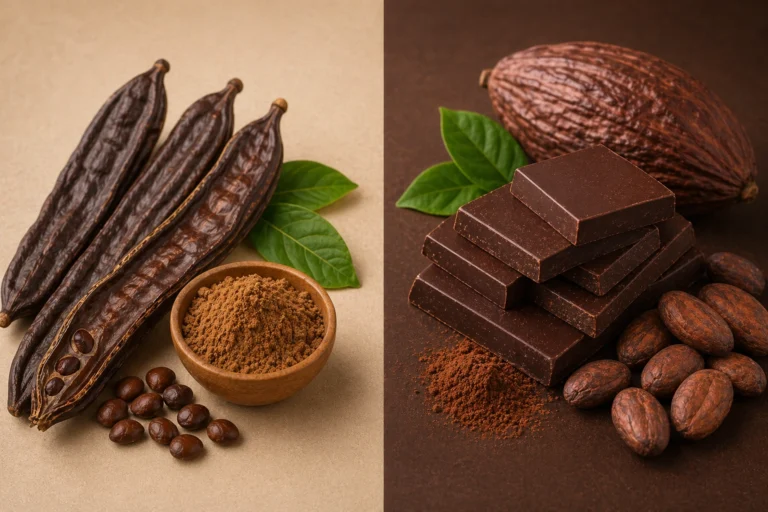
It looks and behaves somewhat like chocolate, but it does not taste the same. Carob chocolate is typically sweeter, milder, and more toasted, while regular chocolate has a deeper cocoa flavor and more bitterness.
What Is Carob Chocolate?
“Carob chocolate” is a common name for confectionery made with carob as the main flavor base. Technically, it is not traditional chocolate because it does not come from cacao beans or contain cocoa solids.
The name is still useful because carob chocolate is often molded, sold, and used in many of the same formats as chocolate. If you want the ingredient background first, see What Is Carob?.
What Is Carob Chocolate Made Of?
Ingredients vary by brand, but many carob chocolate products contain:
- carob powder for the main flavor
- fat such as palm kernel oil, coconut oil, cocoa-butter-style alternatives, or another confectionery fat
- sweetener, depending on the formula
- vanilla or other flavoring
- emulsifiers in some commercial products
- milk ingredients in some versions
The exact ingredient list matters because two products labeled “carob chocolate” can have noticeably different sweetness, texture, and melting behavior.
For the dry ingredient behind many of these products, see the Carob Powder guide.
What Does Carob Chocolate Taste Like?
Carob chocolate usually tastes sweet, mellow, roasted, and mildly caramel-like. It has less of the deep, bittersweet flavor associated with cocoa-based chocolate.
- sweet rather than bitter
- toasted and earthy
- mildly caramel-like
- softer and less intense than chocolate
If you want a fuller explanation of the underlying flavor, read What Does Carob Taste Like?.
Carob Chocolate vs Regular Chocolate
| Feature | Carob chocolate | Regular chocolate |
|---|---|---|
| Main flavor source | Carob | Cocoa / cacao |
| Taste | Sweet, toasted, mellow | Rich, cocoa-forward, bittersweet |
| Bitterness | Usually low | Varies, but unsweetened cocoa is bitter |
| Common forms | Bars, chips, coatings | Bars, chips, coatings, baking chocolate |
| Melting | Depends heavily on the fat blend | More predictable chocolate melt |
| Best expectation | A carob confection with its own flavor | Classic chocolate flavor |
For a broader ingredient comparison covering powders, chips, cakes, and substitutions, see Carob vs Chocolate.
Common Forms of Carob Chocolate
Carob chocolate bars
Bars are made for snacking or chopping into desserts. Texture can range from firm and candy-like to softer and more coating-like depending on the fat and sweetener used.
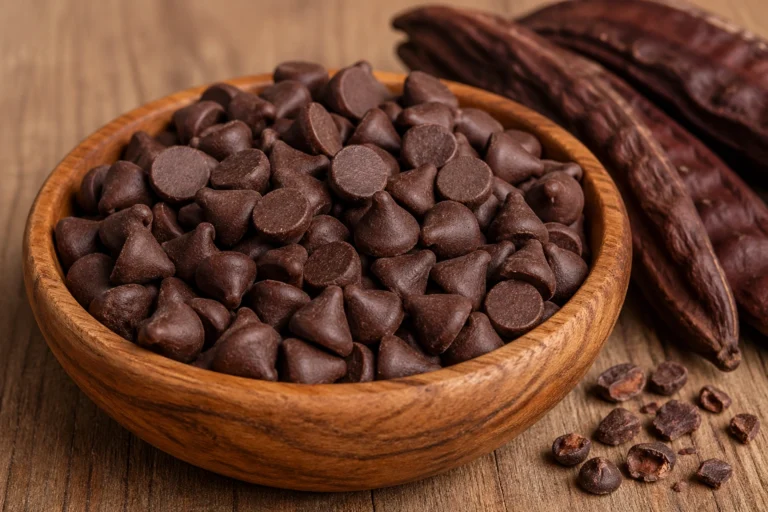
Carob chips
Carob chips are the most familiar baking format. They are designed for cookies, muffins, quick breads, snack bars, and similar recipes. If you specifically want a version without added sweetener, see the guide to unsweetened carob chips.
Carob coating pieces or wafers
Some products are formulated for melting and coating rather than holding their shape in the oven. These can be useful for bark, dipped treats, or drizzles.
Does Carob Chocolate Melt Like Chocolate?
Not always. Melting behavior depends on how the product is formulated. Some carob bars and wafers melt smoothly, while many carob chips are designed to hold their shape and can soften without becoming as fluid as chocolate chips.
This is why it is better to choose the format for the job: baking chips for cookies, a melt-friendly coating product for dipping, and bars for snacking or chopping.
How to Use Carob Chocolate
- Cookies: fold carob chips into cookie dough.
- Muffins and quick breads: add chips or chopped pieces.
- Cakes: use chopped carob pieces as mix-ins or toppings.
- Bark: use a product designed to melt, then add nuts or dried fruit.
- Snack bars and bites: mix in chopped carob chocolate for texture and sweetness.
- Decorating: shave or chop bars over finished desserts.
For practical ideas using carob in familiar recipes, browse the Carob Recipes hub.
What to Look for When Buying Carob Chocolate
- Carob content: check that carob is actually a main flavoring ingredient.
- Fat type: this has a major effect on texture and melting.
- Sweetness: some products are much sweeter than others.
- Format: choose chips for baking, bars for snacking or chopping, and coatings for melting.
- Other ingredients: check the label if you are looking for a particular formulation.
Is Carob Chocolate a Chocolate Substitute?
It can fill a similar role in some recipes, but it is not an exact flavor substitute. Use it when you want carob’s sweet, toasted flavor in a chocolate-style format rather than when you need a dessert to taste exactly like cocoa chocolate.
The distinction is especially important in recipes where chocolate flavor is the main feature. In those cases, the finished result will clearly taste different.
Carob Chocolate FAQ
Is carob chocolate actually chocolate?
No. It is a chocolate-style confection made with carob rather than cacao or cocoa solids.
What is carob chocolate made from?
Most versions combine carob powder with fat, sweetener, flavoring, and sometimes emulsifiers or milk ingredients.
Does carob chocolate taste like chocolate?
Not exactly. It is usually sweeter, milder, more toasted, and less bitter than cocoa-based chocolate.
Can you bake with carob chocolate?
Yes. Carob chips and chopped bars can be used in cookies, muffins, cakes, quick breads, and snack bars.
Bottom line: carob chocolate is best understood as a carob-based confection, not imitation cocoa chocolate. Its sweet, toasted flavor and familiar bar-or-chip formats make it useful for snacking and baking, but the taste and melting behavior depend on the exact product.
One Comment